
VibeScaping
A Framework for Cultivating Creative and Resilient Community Gardens


*Elina Taccari is the Chief Experience Curator for Holon Labs.
Part 1: The Genesis of the Vibe - From Digital Code to Living Soil
The evolution of technology often provides powerful new metaphors for understanding and structuring human collaboration. In recent years, a paradigm shift in software development, catalyzed by the advent of powerful artificial intelligence, offers a compelling model for rethinking community engagement in the physical world. This new modality, known as “vibe coding,” represents a departure from rigid, top-down instruction toward a more fluid, iterative, and intent-driven process of creation. By deconstructing the principles, tensions, and philosophical underpinnings of vibe coding, a framework emerges that can be transposed from the digital realm of code to the living soil of a community garden, offering a novel approach to landscape design that is both democratic and dynamic. This initial section will explore the origins and mechanics of vibe coding, analyzing its dual nature as both a tool for rapid prototyping and a method of responsible, expert-augmented development. In doing so, it will establish the conceptual foundation for “Vibe-Scaping,” a methodology designed to harness the collective creativity of a community.
1.1 Deconstructing Vibe Coding: The Dialectic of Intent and Implementation
At its core, vibe coding is a contemporary software development practice that utilizes artificial intelligence (AI), specifically large language models (LLMs), to generate functional code from natural language prompts.1 This approach fundamentally alters the role of the human creator. Instead of meticulously writing code line-by-line, a process that demands deep knowledge of syntax and logic, the developer engages in a conversational loop with an AI assistant. The focus shifts from the granular details of implementation—the “how”—to the high-level vision and desired outcome—the “what,” or the “vibe”.3 This represents a significant abstraction in the creative process, allowing individuals to articulate their intent in plain language while the AI handles the technical translation into executable code.6
The term was introduced to the lexicon in February 2025 by the prominent AI researcher Andrej Karpathy. In a widely circulated social media post, he described a new creative state: “There’s a new kind of coding I call ‘vibe coding’, where you fully give in to the vibes, embrace exponentials, and forget that the code even exists”.7 This evocative description captured the most radical and exploratory form of the practice, where the human creator places immense trust in the AI’s output, prioritizing speed and ideation above all else. The concept quickly gained traction, entering the Merriam-Webster Dictionary as a trending term and becoming a subject of intense discussion within the technology industry.7
However, as the practice has matured, a critical distinction has emerged, revealing that vibe coding is not a monolithic activity but exists on a spectrum of human-AI collaboration. This spectrum is defined by the level of human oversight and the stakes of the project.
On one end lies “Pure” Vibe Coding, which aligns with Karpathy’s original, provocative definition. In this mode, the user may accept AI-generated code without a thorough review or even a full understanding of its mechanics.7 This approach is characterized by a “code first, refine later” mindset, embracing experimentation and rapid iteration.6 It is exceptionally well-suited for low-stakes endeavors such as “throwaway weekend projects,” rapid prototyping, or enabling non-technical users to build simple applications and games.1 Here, the goal is not to produce robust, maintainable software but to quickly translate an idea into a functional artifact, making it a powerful tool for learning and exploration.10 The user’s role is akin to that of a director, providing high-level goals and feedback while letting the AI manage the performance.7
On the other end of the spectrum is Responsible AI-Assisted Development. This is the practical and professional application of the concept, where AI serves not as an autonomous creator but as a powerful collaborator or “pair programmer”.1 In this model, an experienced developer guides the AI to generate code but then rigorously reviews, tests, debugs, and ultimately takes full ownership of the final product.4 The developer must be able to explain exactly what the code does and how it works before committing it to a production system.10 This approach does not replace the engineer’s expertise but augments it, automating tedious tasks and accelerating development cycles within established professional workflows.1 It is essential for building enterprise-grade software that is scalable, secure, and maintainable.13
The operational mechanics of vibe coding, regardless of where it falls on this spectrum, are defined by a tight, iterative feedback loop:
Describe the Goal: The user initiates the process with a high-level prompt in natural language, such as, “Create a Python function that reads a CSV file and returns a list of all values from the ‘email’ column”.1
AI Generates Code: The LLM interprets the request and produces an initial block of code.1
Execute and Observe: The user runs the generated code to assess whether it functions as intended.1
Provide Feedback and Refine: If the code produces an error or the output is not quite right, the user provides new instructions for refinement, such as, “That works, but add error handling for when the file is not found”.1
Repeat: This conversational cycle of describing, generating, testing, and refining continues until the desired functionality is achieved.1
This process, while powerful, is not without significant challenges. The very speed and accessibility that make vibe coding attractive can introduce substantial risks. Code generated through a purely vibe-driven approach is often of low quality, described by one developer as “unreadable spaghetti wrapped in glitter”.15 It can be exceedingly difficult to debug, suffer from poor performance, and contain critical security vulnerabilities, especially if the creator does not understand the underlying logic.6 These limitations underscore the inherent tension at the heart of the practice: a trade-off between the fluid, intuitive, and rapid act of creation and the structured, rigorous demands of sustainable and responsible engineering.11
1.2 The “Vibe” as a Creative Modality: Democratization and its Discontents
The most profound impact of vibe coding is its radical democratization of software development. By abstracting away the complexities of programming syntax, it empowers a new class of creators—hobbyists, designers, artists, entrepreneurs, and other non-technical individuals—to build fully functional applications and websites armed with little more than an idea and a willingness to experiment.2 This dramatically flattens the historically steep learning curve that has served as a barrier to entry into the world of software creation, making it possible for anyone to automate tasks or build custom tools.10 This shift has been particularly notable in the startup ecosystem, where founders are leveraging these tools to generate the vast majority of their initial codebase, accelerating the journey from concept to minimum viable product.9
This democratization precipitates a fundamental shift in the creator’s role. The bottleneck in the creative process is no longer the speed of implementation but the quality of the initial idea and the clarity of the creator’s vision.18 The human’s primary function evolves from that of a technician, meticulously crafting each line of code, to that of an orchestrator, manager, or director.3 In this new paradigm, the most critical skills are not mastery of a programming language but the ability to articulate requirements clearly, to engage in effective prompt engineering, and, most crucially, “knowing which problems are worth solving”.5 The human becomes the source of intent, the guide for the AI, and the final arbiter of quality.
This leads to the central philosophical tension embedded within the concept of vibe coding: the dialectic between the “vibe” and the “spec”.16 The “vibe” represents the fluid, intuitive, and exploratory mode of creation. It is improvisational, playful, and speculative, allowing for the rapid exploration of abstract ideas.15 This is the modality of the initial spark, the method for getting unstuck and testing a hypothesis without the friction of formal planning. In contrast, the “spec” (specification) represents the structured, rigorous, and documented approach of traditional software engineering. It prioritizes intentionality, alignment, maintainability, and reliability—qualities that are indispensable for building complex, enterprise-grade systems.12
Vibe coding, in its purest form, is the champion of the “vibe.” It excels at the front end of the creative process, where momentum is paramount. Traditional engineering, on the other hand, is the domain of the “spec,” ensuring that what is created is also sustainable. These are not opposing camps but complementary tools for different stages of a project.16 The existence of this spectrum, from the purely vibe-driven prototype to the spec-driven production system, is precisely what makes the concept so versatile and powerful. It provides a model that is not monolithic but adaptable, allowing for different levels of engagement and rigor based on the creator’s expertise and the project’s specific needs.
Perhaps the most valuable function of the “vibe” modality is its ability to overcome the initial “activation energy” required for creation. For any project, whether it is writing a program, painting a canvas, or planting a garden, the gap between a high-level concept and the first concrete, practical step can be intimidating. This initial hurdle often leads to analysis paralysis and inaction. Vibe coding effectively bridges this gap by allowing the creator to remain in the realm of high-level intent while the AI handles the tedious and often difficult work of initial scaffolding.1 For a non-coder, this means bypassing the need to learn syntax before seeing a result; for an expert, it means automating the creation of boilerplate code to get to the core problem faster. This principle—of using an intuitive, intent-driven process to overcome the inertia of starting—is the key insight that allows the vibe coding model to be translated from the digital world to the physical challenges of community landscaping.
Part 2: Introducing Vibe-Scaping - A Genealogy of Participatory Creation
Drawing upon the conceptual framework established by vibe coding, it is possible to propose a parallel methodology for the domain of community landscaping: Vibe-Scaping. This approach is not merely a clever application of a technological metaphor; rather, it finds its deepest roots in a rich and powerful history of grassroots movements that have long sought to reclaim, reshape, and re-humanize public space through spontaneous and participatory acts of creation. Vibe-Scaping synthesizes the intent-driven, iterative nature of vibe coding with the philosophies of unsanctioned art and direct-action environmentalism. This section will formally define the Vibe-Scaping framework, draw direct parallels to its digital antecedent, and then ground it in the historical lineage of graffiti, yarn bombing, guerrilla gardening, and visionary art. In doing so, it will demonstrate that Vibe-Scaping is not a new invention but a new name for a timeless human impulse: the desire to collaboratively shape the environment in which one lives.
2.1 Conceptual Framework: Defining Vibe-Scaping
Vibe-Scaping is a participatory and emergent approach to landscape and garden design that prioritizes community intuition, cultural expression, and iterative, hands-on creation. It functions as a collaborative process where the “vibe”—the desired feeling, story, or function of a space—guides the initial act of creation, which is then refined over time through direct observation of the garden’s growth and ongoing community feedback. It is a methodology that formally acknowledges and makes space for multiple authors, from children and neighbors to community activists, and embraces a degree of managed impermanence, allowing the garden to evolve as a living reflection of the community it serves.
The principles of Vibe-Scaping are directly analogous to those of vibe coding. Where the vibe coder uses natural language prompts to guide an AI, the “Vibe-Scaper” uses cultural stories, personal memories, and shared aesthetic desires to guide the physical act of planting. The tight, iterative loop of prompt-generate-test-refine in software development is mirrored in the garden through the cycle of plant-observe-tend-adapt. The role of the community member shifts from that of a passive user of a pre-designed space to an active co-creator and steward. Just as vibe coding exists on a spectrum from “pure” exploration to “responsible” integration, Vibe-Scaping can manifest as both spontaneous, unsanctioned planting within a designated zone and as thoughtful community contributions that are harmonized with a larger, expert-informed landscape plan.
This framework establishes Vibe-Scaping as a coherent methodology. However, its true power and legitimacy derive not from this technological analogy alone, but from its deep resonance with historical movements of grassroots creativity.
2.2 A Lineage of Reclaimed Space and Spontaneous Art
Vibe-Scaping is a direct inheritor of powerful traditions of informal, often unsanctioned, public art and activism. These movements, while diverse in their methods and aesthetics, share a common philosophical core: the reclamation of agency by individuals and communities within environments that are often perceived as sterile, over-regulated, or neglected. By analyzing the legacies of graffiti, yarn bombing, guerrilla gardening, and visionary art, the foundational principles of Vibe-Scaping are revealed not as abstract concepts but as lived practices with a proven history of social and environmental impact.
The Wall as Canvas: Graffiti’s Legacy of Presence and Protest
Modern graffiti emerged in the urban landscapes of New York City in the early 1970s, born from a “cultural climate of alienation and class divide”.19 For marginalized youth struggling to gain recognition within a dominant culture, the city’s walls and subway trains became an alternative canvas. Graffiti was, and remains, a powerful act of self-assertion—an “intervention in the dominant culture” that challenges notions of property and control.20 At its core, it is a territorial claim rooted not in legal ownership but in lived experience and inhabitance. As one analysis puts it, the underlying message is, “I live here, so I have the right to design my environment”.21 This act of marking space, of making one’s presence visible, is a raw form of resistance against anonymity and a way of opening up a dialogue about who has the right to shape the public realm.19
Connection to Vibe-Scaping: Vibe-Scaping channels this fundamental human desire for self-expression and environmental authorship. It recognizes that community members, particularly those who may feel disconnected from formal planning processes, have a deep-seated need to make their mark. By providing a sanctioned space for this impulse, Vibe-Scaping transforms a potentially adversarial act of protest into a collaborative and productive act of creation within the garden, giving a tangible voice to the community’s presence and identity.
The Soft Intervention: Yarn Bombing’s Humanization of the Urban Fabric
Yarn bombing, also known as guerrilla knitting or kniffiti, emerged in the mid-2000s as a distinct form of street art that employs knitted or crocheted fiber instead of paint.23 Its primary impulse was to reclaim and personalize “sterile or cold public places,” such as signposts, bike racks, and statues, with colorful, tactile, and often whimsical creations.23 The movement, often credited to artist Magda Sayeg, who first covered her boutique’s door handle in a custom cozy in 2005, is frequently described as bringing “warmth into an urban environment”.24 By using the traditionally feminine and domestic crafts of knitting and crochet, yarn bombing offers a “soft” intervention that subverts the often masculine-coded domain of traditional graffiti.23 Its installations are non-permanent and easily removable, and their primary effect is to surprise and delight, injecting a moment of unexpected humanity and care into the urban landscape.24
Connection to Vibe-Scaping: Vibe-Scaping shares this “softening” impulse. While it can be a vehicle for bold statements, it is also fundamentally about nurturing and care. The act of planting a flower, tending a vegetable patch, or adding a small, handmade ornament to a garden bed is akin to wrapping a cold metal pole in a colorful knit cozy. It is an act that says, “This space is cared for; this space is loved.” Vibe-Scaping embraces this desire to add a layer of personal, human-scale beauty to a shared environment, making it feel less like a managed project and more like a collective home.
The Green Insurgency: Guerrilla Gardening’s Direct Action for Life
Guerrilla gardening is the practice of cultivating plants in neglected, abandoned, or publicly owned spaces without permission.26 It is a form of nonviolent direct action and civil disobedience that seeks to transform barren urban landscapes into areas of life and productivity.26 The goals of this global movement are diverse and multifaceted, ranging from simple beautification to more radical aims like boosting biodiversity, producing fresh food for the community, reclaiming the commons from privatization, and challenging the commodification of land.28 It is a fundamentally grassroots movement where “flower power meets people power,” empowering individuals to take direct action to improve their own neighborhoods.28 Practitioners use a variety of tactics, from covert nighttime plantings to tossing “seed bombs”—small balls of clay, compost, and seeds—into hard-to-reach areas.30
Connection to Vibe-Scaping: Vibe-Scaping can be understood as a sanctioned and integrated form of guerrilla gardening. It harnesses the movement’s core ethos of direct, positive environmental action and provides a designated and supportive context for it to flourish. It takes the “guerrilla” impulse—the desire to see life and beauty where there is neglect—and removes the legal risk and the need for covertness. It invites the community to engage in the same acts of reclamation and cultivation, but as celebrated partners rather than clandestine activists, thereby embedding the spirit of the green insurgency into the very fabric of the garden’s design and management.
The Inner Landscape: Visionary Art’s Validation of Intuitive Creation
Visionary art is a genre that purports to transcend the physical world, portraying spiritual, mystical, or inner states of awareness.32 It often arises from an “innate personal vision,” produced by self-taught individuals who operate outside the formal constraints of the academic art world.33 Artists in this tradition are seen as listening to their own “inner voice” so profoundly that they may not even consider their work to be “art” in the conventional sense.33 The style is often characterized by surreal, dreamlike imagery, vibrant colors, and the use of personal or universal symbols to explore the nature of consciousness.34 This art form bridges the gap between the deeply personal and the universal, seeking to communicate profound insights and transformative experiences that resonate with a shared human condition.34
Connection to Vibe-Scaping: Vibe-Scaping validates the “visionary” impulse that exists within every community member. It operates on the principle that the desire to plant a specific marigold from a childhood memory, a particular herb tied to one’s cultural heritage, or a strangely shaped gourd simply because it feels right, is not a trivial or arbitrary whim. Rather, it is a legitimate act of visionary creation—an externalization of an inner landscape of memory, meaning, and intuition. Vibe-Scaping honors this personal vision as a valid and valuable contribution to the collective artwork of the garden, recognizing that the most resonant and meaningful spaces are those that reflect the inner worlds of the people who inhabit them.
These diverse movements, from the confrontational to the nurturing, are not disparate phenomena. They represent a spectrum of human response to environments that feel impersonal or out of one’s control. The common thread that unites them is the profound and enduring human need to reclaim agency and shape one’s own surroundings. Vibe-Scaping synthesizes these traditions into a single, coherent framework, providing a methodology that can accommodate the full range of human creative motivations.
Part 3: The Holon Labs Garden - Vibe-Scaping as a System for Community Engagement
Having established the theoretical and historical foundations of Vibe-Scaping, the framework can now be applied as a practical system for community engagement within the specific context of the Holon Labs Gardens. Any community-based project, particularly one involving the design and stewardship of a shared physical space, is a locus of inherent tensions. The Vibe-Scaping methodology is not designed to eliminate these tensions but to provide a productive and creative structure for managing them. It offers a tangible process for mediating between expert-led vision and collective community desire, transforming potential points of conflict into opportunities for deeper collaboration, ownership, and innovation. This section will outline the nature of this central tension and propose a specific, actionable implementation of Vibe-Scaping—the “Vibe-Scaping Zone”—as a mechanism for channeling friction into creative flow.
3.1 The Locus of Tension: Expert Vision vs. Collective Desire
The central challenge in any participatory design project lies in navigating the differing perspectives of its stakeholders. In the context of the Holon Labs Gardens, this dynamic can be characterized as a tension between a “top-down” expert vision and a “bottom-up” collective desire.
The Top-Down View is typically held by the project’s formal leadership: landscape architects, horticultural experts, project managers, and even the primary homeowners or funders. This perspective prioritizes a set of rational and systemic goals. These often include aesthetic coherence (a unified design language), long-term maintainability (choosing plants and layouts that are durable and require reasonable upkeep), ecological integrity (adhering to principles of conservation and habitat creation), and overall project integrity (ensuring the final outcome aligns with the initial mission and budget). In the language of our founding analogy, this is the “spec-driven development” of the garden—a structured, intentional, and carefully planned approach designed to produce a reliable and high-quality outcome.16
The Bottom-Up View, conversely, is not a single perspective but a polyphony of voices, desires, and motivations held by the diverse members of the community. This collective desire is composed of individual cultural memories, deeply personal aesthetic preferences, functional needs (e.g., for food, for play, for quiet contemplation), and the spontaneous creative impulses of many different people. It is inherently multifaceted, sometimes contradictory, and deeply personal. This is the “vibe-driven development” of the garden—an emergent, intuitive, and exploratory force that prioritizes immediate expression and personal meaning.15
Without a mediating framework, these two valid and valuable perspectives are set on a collision course. The top-down approach, if implemented without sufficient community input, can be perceived as exclusionary, sterile, and authoritarian, leading to a lack of community ownership and engagement. Conversely, an unmanaged bottom-up approach can result in a chaotic, incoherent, and ultimately unsustainable space that fails to meet the project’s larger goals. This predictable conflict is the primary operational challenge that the Vibe-Scaping system is designed to address and resolve.
3.2 The Vibe-Scaping Zone: A Proposal for Designated Freedom
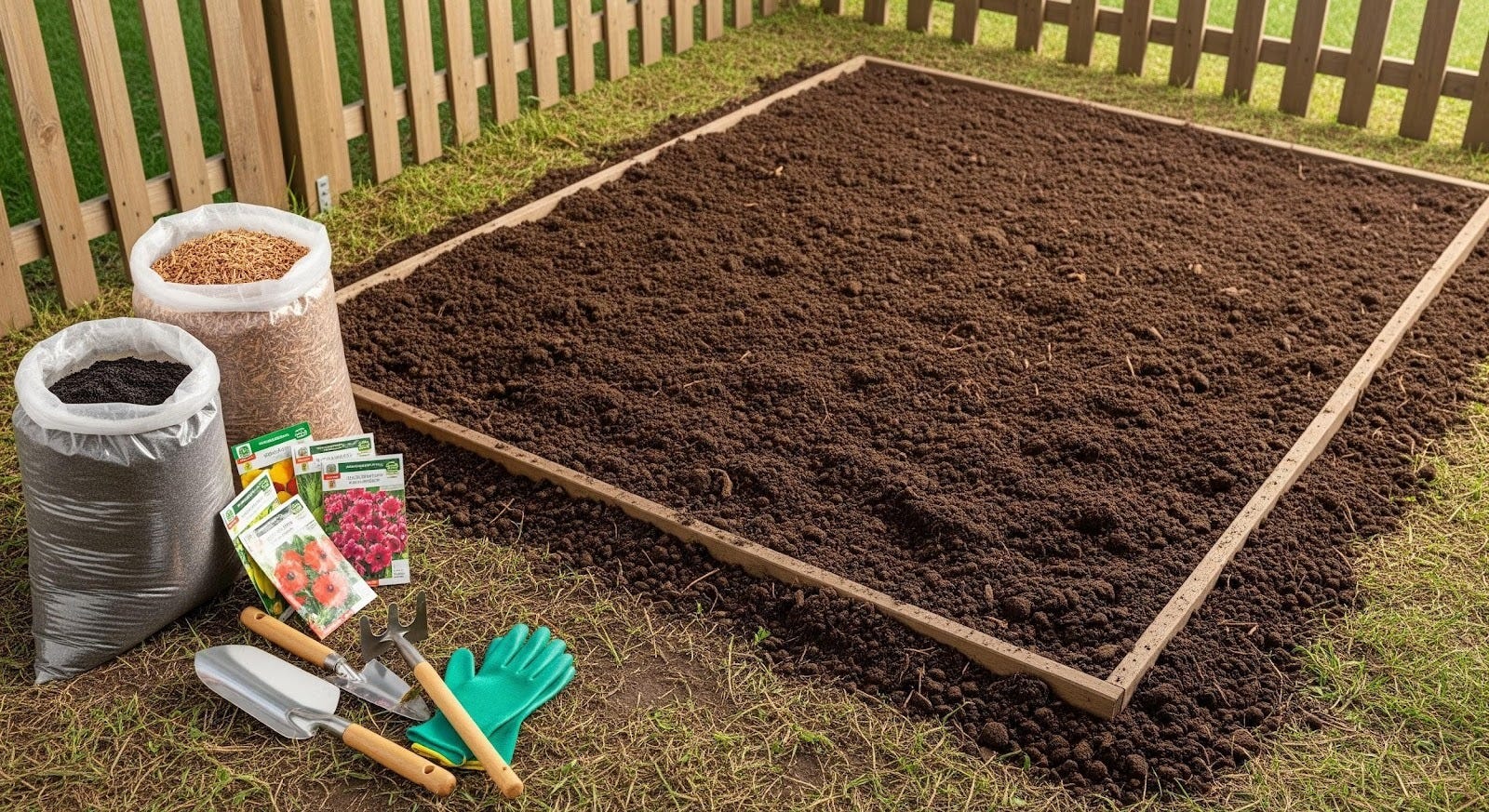
The core practical mechanism for implementing Vibe-Scaping at Holon Labs Gardens is the formal designation of specific areas and/or times where the rules of the top-down, expert-led plan are intentionally and explicitly suspended. This is the creation of a sanctioned space for “pure” Vibe-Scaping, a living laboratory for community expression. It is crucial to note that this does not apply to the entire garden, but to a clearly demarcated and celebrated portion of it.
The methodology for creating this space can be approached in two complementary ways:
Spatial Designation: A specific plot of land, a series of large planters, a prominent wall for vertical gardening, or a stretch of fence is officially designated as the “Vibe-Scaping Zone.” Within the boundaries of this zone, community members are not just permitted but are actively invited and encouraged to plant, build, decorate, and create with a high degree of autonomy. Signage would clearly articulate the purpose of the zone, framing it as a space for community creativity and experimentation. This strategy directly mirrors the principles of creative placemaking, which often involves transforming underutilized or vacant lots into vibrant community hubs that reflect local identity and priorities.37 The zone becomes a designated canvas for the community’s collective “vibe.”
Temporal Designation: To complement the spatial zone, the project can schedule regular “Vibe-Scaping Days” or seasonal festivals. These events would be organized opportunities for community members to come together to work on the Vibe-Scaping Zone. Participants would be encouraged to bring plants from their own homes, seeds saved from the previous year, handmade art, and other materials. This transforms the individual act of gardening into a festive, collaborative celebration, akin to a traditional barn-raising or a community mural painting event.38 These scheduled events would build social cohesion, lower the barrier to participation for newcomers, and create a visible and exciting rhythm of community co-creation.
By establishing these designated spaces and times for freedom, the Vibe-Scaping framework provides a structure that can contain and channel the unpredictable and diverse energies of the community in a way that is productive rather than disruptive.
3.3 From Friction to Flow: Channeling Conflict into Creativity
The implementation of a Vibe-Scaping Zone does more than simply carve out a space for community art; it fundamentally re-engineers the social dynamics of the entire project, transforming potential friction into a source of creative energy and deeper engagement.
First, the zone functions as a crucial “release valve.” In any managed environment, there will be creative impulses that do not align with the formal plan. Without a legitimate outlet, these impulses can manifest as “rogue” plantings in the main garden beds, simmering resentment toward the project’s leadership, or gradual disengagement from the community. The Vibe-Scaping Zone provides a positive and celebrated destination for these energies. The conversation shifts from a prohibitive “You can’t plant that here” to a constructive and welcoming “That’s a wonderful idea! The perfect place for it is in the Vibe-Scaping Zone.” This simple act of redirection validates the contributor’s impulse while simultaneously protecting the integrity of the more formally designed areas. Paradoxically, the formal designation of a space for “chaos” strengthens and legitimizes the “order” of the rest of the project. It is not a concession of control but a strategic tool for project management that earns the social license needed to maintain a coherent overall vision.
Second, the zone fosters a profound sense of ownership and dialogue. By giving the community a space that is unequivocally theirs to shape, the project demonstrates a deep and authentic respect for their creative agency.39 This act of trust builds goodwill and encourages a sense of stewardship that extends to the entire garden. The zone becomes a living gallery of community expression, a three-dimensional storybook written in plants, soil, and handmade artifacts. It serves as a physical embodiment of the community’s identity and a constant invitation for conversation and connection, transforming a generic public space into a deeply “meaningful place”.22
Finally, the Vibe-Scaping Zone becomes a source of aesthetic and ecological diversity. It introduces an element of unpredictability, dynamism, and raw, personal character that can beautifully contrast with and complement the more structured and polished design of the main garden areas. More than that, the zone functions as a powerful, real-time data-gathering tool for future design iterations. The plants, objects, and activities that spontaneously emerge in the zone provide invaluable, authentic feedback on the community’s true preferences, needs, and desires—data that is far richer and more reliable than what can be gleaned from surveys or formal meetings. If the zone fills with edible herbs, it signals a strong interest in food production. If it becomes a canvas for children’s art, it highlights a need for playful, family-oriented spaces. This emergent, community-curated space creates a dynamic feedback loop, allowing the garden’s formal plan to evolve over time in direct response to the lived experience of its users, perfectly mirroring the iterative refinement process at the heart of vibe coding.1
Part 4: The Ecology of Culture - Conservation, Dialogue, and Deep Connection
The Vibe-Scaping framework provides a robust system for managing the tension between expert design and community creativity. However, it must also navigate a more profound and philosophically complex challenge: the conflict between the goals of ecological conservation and the imperatives of socio-cultural expression. This dilemma, often manifesting as a debate over native versus non-native plant species, is not a technical problem to be solved but a dynamic tension to be managed with wisdom and care. This section argues for a more holistic definition of “conservation”—one that recognizes the resilience of a community space depends on sustaining both its ecological and its social fabric. It will demonstrate how the Vibe-Scaping framework can be used not to eliminate this tension, but to make it visible, discussable, and ultimately, a powerful catalyst for building deeper community connection.
4.1 The Conservation Dilemma: Native Flora vs. Cultural Artifacts
At the heart of this challenge are two distinct, valid, and often conflicting imperatives.
The Ecological Imperative is grounded in the scientific principles of restoration ecology. This position advocates for the preferential or exclusive use of plant species that are native to the local ecosystem. The rationale is compelling and scientifically sound: native plants are best adapted to the local climate and soil, require less water and maintenance, and, most critically, form the foundational layer of the local food web. They provide essential food and habitat for native pollinators, insects, birds, and other wildlife, thereby supporting biodiversity and contributing to the overall health and resilience of the regional ecosystem. From this perspective, the introduction of non-native species can be seen as a disruption that offers little ecological benefit and, in the worst cases, can lead to the spread of invasive plants that outcompete and displace native flora.
The Socio-Cultural Imperative, on the other hand, is grounded in the lived experience of the community. This position recognizes that, for many people, plants are not merely ecological units; they are living artifacts imbued with deep personal and cultural meaning. A rose cutting passed down through generations from a grandmother’s garden is a vessel of memory and family history. A specific variety of basil or cilantro is essential for preparing traditional cuisine that connects an individual to their cultural heritage. A flower that grew in a distant homeland is a tangible link to a place of origin. The desire to plant these species is not an act of ecological ignorance but a profound act of “conserving” cultural identity, personal stories, and social bonds. For these community members, a garden composed exclusively of unfamiliar native plants, however ecologically correct, can feel sterile, alienating, and devoid of personal resonance.
The conflict is therefore not between a “right” and a “wrong” position, but between two different and equally legitimate forms of conservation. One seeks to conserve the integrity of the local ecosystem; the other seeks to conserve the integrity of human culture and memory. A successful community garden framework must find a way to honor both.
4.2 Redefining Conservation: From Ecological Purity to Socio-Ecological Resilience
The resolution to this dilemma lies in expanding the definition of conservation itself. A truly resilient and sustainable community space cannot be achieved by focusing on ecological purity at the expense of its human context. The garden must be understood not as a pristine nature preserve walled off from human influence, but as a complex and integrated socio-ecological system. In such a system, the health of the human community and the health of the garden ecosystem are inextricably linked. A garden that is ecologically perfect but fails to engage, inspire, and be loved by its community is, in a social sense, a fragile and unsustainable project. Its long-term survival depends on the very human stewardship that it may have alienated through its purist approach.
This perspective reframes the value of “non-native” plants. Within the socio-ecological model, the grandmother’s rose bush is not simply an exotic species with limited value for local pollinators; it is a vital “cultural artifact” that strengthens the human-to-garden bond. Its presence ensures that a family feels a deep, personal connection to the space, motivating them to invest their time, care, and passion in its ongoing stewardship. This emotional and social capital is as crucial to the garden’s long-term resilience as the native pollinator habitat.
The Vibe-Scaping Zone provides the perfect practical solution for managing this integrated approach. It can be explicitly designated as a space where the strict “native-only” rule is relaxed. By framing it as a “Heritage Patch,” a “Memory Garden,” or a “Cultural Commons,” the project creates a sanctioned and celebrated home for these living cultural artifacts. This approach achieves a critical balance: it respects and validates the community’s need for cultural expression and personal connection without compromising the overarching ecological goals of the garden’s main, more formally designed areas. It allows the garden to be, simultaneously, a hub of local biodiversity and a living museum of the community’s diverse human stories. This honors the fundamental difference between universalist, scientific knowledge (ecology) and particularist, lived experience (culture), providing a physical and social technology where both ways of knowing can coexist and mutually enrich one another.
4.3 The Garden as a Forum for Productive Disagreement
Crucially, the Vibe-Scaping framework does not seek to hide or eliminate the tension between these two imperatives. Instead, it provides a structure to make that tension visible, discussable, and productive. The goal is not to force a premature or artificial consensus but to build a more resilient community through the very process of navigating disagreement. The garden becomes a forum where differing values can be expressed, understood, and negotiated respectfully.
This process can be facilitated through several actionable mechanisms:
Plant Story-Sharing Sessions: The project can host regular events, perhaps held within the Vibe-Scaping Zone itself, where community members are invited to share the personal and cultural stories behind the plants they have planted or wish to plant. This simple act transforms a potentially divisive debate about plant selection into a powerful and unifying celebration of heritage and shared humanity. A conversation that begins with “Why did you plant that non-native species?” can evolve into “Tell me about your grandmother.”
Educational Workshops as “Teachable Moments”: The inherent conflict provides the perfect opportunity for mutual education. The project’s expert leadership can host workshops on the vital importance of native plants and pollinators, explaining the ecological rationale behind the main garden’s design. Simultaneously, community members can lead workshops on growing specific culinary herbs, saving heirloom seeds, or the cultural significance of certain flowers. This fosters a two-way flow of knowledge, building respect for both scientific and traditional wisdom.
Interpretive Labeling and Storytelling: The plants within the Vibe-Scaping Zone can be accompanied by small, durable labels that tell their story. A simple tag reading “Maria’s Grandmother’s Rose, brought from Italy in 1960” or “David’s Cilantro, grown for the community potluck” does more than identify a plant. It transforms the plant into a conversation starter, an anchor for a narrative, and a visible symbol of the community’s diverse roots.
By embracing this tension as a tool for engagement, the community moves beyond superficial politeness to a deeper and more authentic form of connection. This process is a form of “social permaculture.” Just as agricultural permaculture uses principles of observation, interaction, and feedback to design resilient, self-regulating ecosystems 26, this social application uses the Vibe-Scaping framework to cultivate a more resilient, self-regulating social ecosystem. The Zone allows for the observation of community desires. The story-sharing sessions are a form of direct interaction. The use of this information to inform the garden’s evolution is a critical feedback loop. The process of discussing, and even arguing about, what to plant becomes the very process that cultivates a stronger, more deeply rooted community.
Part 5: Wrapping up - Cultivating the Whole
This report began by examining a novel practice in the digital world—vibe coding—and has journeyed from the abstract realm of software to the tangible soil of a community garden. The analysis has shown that vibe coding, with its core tension between intuitive, vibe-driven creation and rigorous, spec-driven engineering, offers a powerful metaphor for understanding the fundamental dynamics of any collaborative creative project. It provides a language and a model for a deeply human and ancient set of practices, which have been synthesized here under the new framework of Vibe-Scaping.
Vibe-Scaping has been defined as a participatory approach to landscape design that is grounded in a rich historical lineage of grassroots movements. Like graffiti, it provides an outlet for self-expression and the reclamation of agency. Like yarn bombing, it seeks to humanize and soften shared spaces. Like guerrilla gardening, it is a form of direct, positive action for environmental and community benefit. And like visionary art, it validates the innate, intuitive creative impulse that resides within every individual. By providing a designated and celebrated space for this impulse—the Vibe-Scaping Zone—the framework offers a practical solution for mediating the inherent conflict between top-down expert vision and bottom-up community desire. It transforms this potential friction from a source of conflict into a catalyst for creativity, dialogue, and profound community ownership.
Furthermore, the Vibe-Scaping framework provides a sophisticated and humane methodology for navigating the complex conservation dilemma between ecological integrity and cultural memory. By proposing a more holistic, socio-ecological definition of resilience, it argues that a truly sustainable space is one that nurtures both its native flora and its human stories. It does not seek to erase disagreement but to harness it, creating a forum where the process of negotiating different values becomes the very mechanism for building a stronger, more deeply connected community.
Ultimately, Vibe-Scaping is more than a gardening technique; it is a comprehensive model for community engagement, that invites exploration, awakens emotion, and inspires a desire to root oneself where new beginnings can grow.
It is a system that embraces tension as productive, values diverse forms of knowledge—from the scientific to the narrative—and uses the process of co-creation to build not just a beautiful physical space, but a resilient and thriving social native ecosystem.
To immerse ourselves in reading the tangible world of nature is to allow ourselves to discover what emerges from it and provide what it needs. It is learning to see the environment with new, curious eyes, an invitation to pause, to leave a mark where the biological process follows its own pace. It is also a way to connect with nature while fostering the conservation of biodiversity.
The final vision for the Holon Labs Gardens, as guided by this framework, is one of a living testament to this philosophy. It is a place where the elegant lines of expert design provide a structure for the vibrant, unpredictable beauty of community expression. It is a landscape where the ecological imperative to support native biodiversity and the human imperative to honor cultural memory are not in conflict, but are woven together into a rich and dynamic tapestry. It is a garden that is constantly evolving, a physical manifestation of an ongoing conversation—a place where the community is not just a user, but the author of its own living story.
Through ecological restoration, we propose immersive experiences, created through the design of purposeful native ecosystems that evoke meaning—mapping on the land a play of textures, scents, and colors that reveal living atmospheres.
Nourishing the foundations of this awareness is essential to expand these types of projects for a new humanity—to inspire the growth of more and more “seed projects” like this. For Holon, the focus is on strengthening connections by humanizing spaces. And this is a big dream that we dare to dream, because it is us who will outline the invisible bridges between what already exists and what we can create together as a network.
Works cited
Vibe Coding Explained: Tools and Guides - Google Cloud, accessed October 17, 2025,
What is VIBE Coding? Who made this viral? - DEV Community, accessed October 17, 2025,
What is Vibe Coding? How To Vibe Your App to Life - Replit Blog, accessed October 17, 2025,
What is Vibe Coding? AI-Powered Development - Decube, accessed October 17, 2025,
The Future of Vibe Coding: How AI-Driven Development Could Transform Programming by 2030 - Nucamp, accessed October 17, 2025,
What is Vibe Coding? | IBM, accessed October 17, 2025,
en.wikipedia.org, accessed October 17, 2025,
What is vibe coding? | AI coding - Cloudflare, accessed October 17, 2025,
Vibe Coding Is Rapidly Reshaping the Software Developer Profession - The New Stack, accessed October 17, 2025,
Not all AI-assisted programming is vibe coding (but vibe coding rocks), accessed October 17, 2025,
Building a working Game in an hour: My Experience with Vibe Coding | by Bartek Bogacki | Agile Insider | Medium, accessed October 17, 2025,
Vibe engineering - Simon Willison’s Weblog, accessed October 17, 2025,
Is Vibe Coding a threat to Software Engineers in the private sector? - Reddit, accessed October 17, 2025,
Read a software engineering blog if you think vibe coding is the future - Reddit, accessed October 17, 2025,
Vibe-Driven Development: How to Code Like an Artist and Still Ship Like a Pro - Medium, accessed October 17, 2025,
Vibe Coding vs. Spec-Driven Development – Alt + E S V - RedMonk, accessed October 17, 2025,
Vibe Coding — the Paradigm Shift in Software Development | by Thushantha Fernando, accessed October 17, 2025,
A definition of “vibe coding,” or: how AI is turning everyone into a software developer | by The Medium Newsletter, accessed October 17, 2025,
Graffiti Art and the Truth of Being – Philosophy @Newcastle, accessed October 17, 2025,
Street and Graffiti Art Movement Overview | TheArtStory, accessed October 17, 2025,
Street Art as Reclaiming the Streets - Brill, accessed October 17, 2025,
(PDF) Street Art, Sweet Art? Reclaiming the “Public” in Public Place - ResearchGate, accessed October 17, 2025,
Yarn bombing - Wikipedia, accessed October 17, 2025,
Taking Yarn to the Streets - FanningSparks, accessed October 17, 2025,
The Rise of Yarn Bombing - The UCSD Guardian, accessed October 17, 2025,
The Permaculture Guide to Covert Guerilla Gardening, accessed October 17, 2025,
Guerilla Gardening and More - Freegan.info, accessed October 17, 2025,
Toolkit: A guide to guerrilla gardening - Imagine5, accessed October 17, 2025,
Full article: Heterogenic nature of guerrilla gardening - Taylor & Francis Online, accessed October 17, 2025,
Guerrilla Gardening: Resist and Reclaim Our Common Spaces | by JM Heatherly - Medium, accessed October 17, 2025,
Guerrilla Gardening Tips, accessed October 17, 2025,
Visionary art - Wikipedia, accessed October 17, 2025,
Definition of Art | American Visionary Art Museum, accessed October 17, 2025,
What is visionary art? Themes, style and artists - Veronica Winters Painting, accessed October 17, 2025,
Visionary Art - Techgnosis, accessed October 17, 2025,
Graffiti and Design: A Philosophical Approach | by Andrew Matsumoto | Medium, accessed October 17, 2025,
What is creative placemaking? | Center for Community Progress, accessed October 17, 2025,
Public Art: Transforming Communities - campbell sculpture, accessed October 17, 2025,
Reclaiming public spaces - Arts Professional, accessed October 17, 2025,
 | A guest post by
|